

Table of contents
Overview
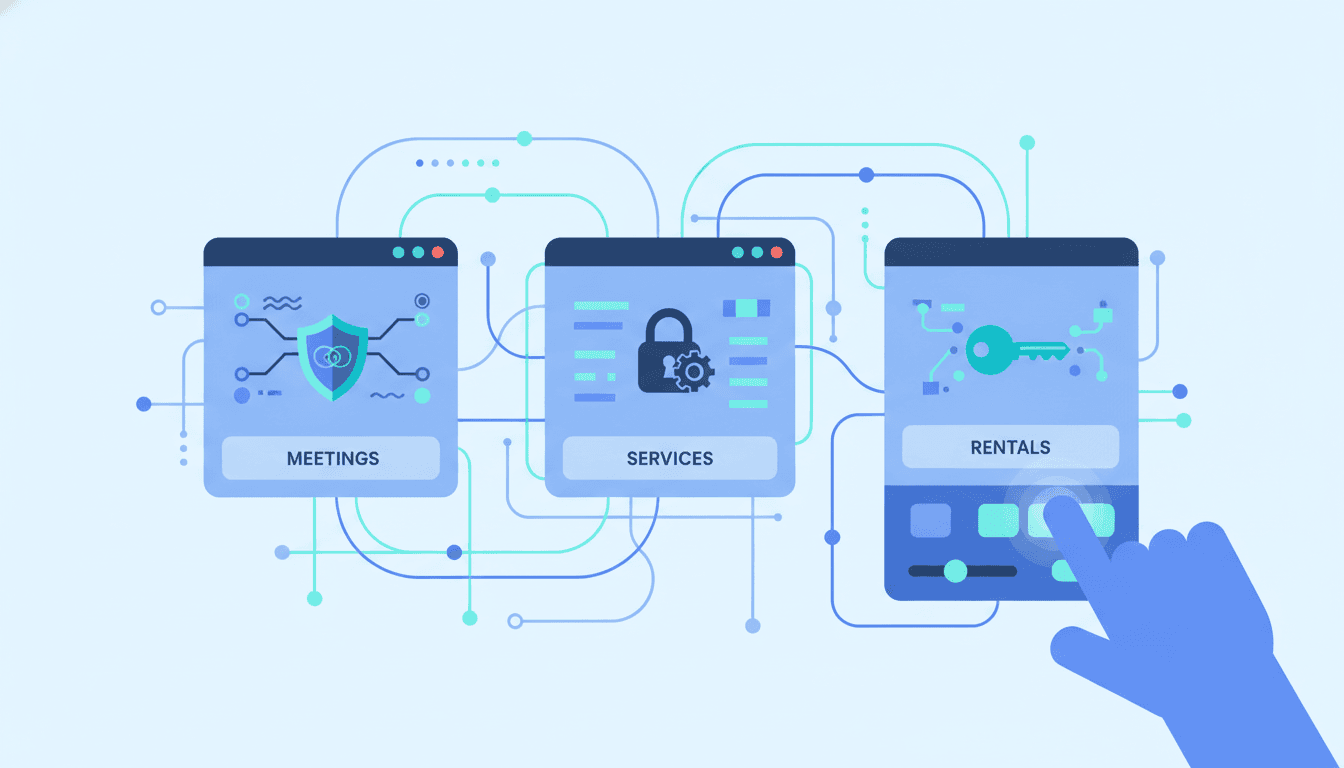
We have expanded and improved Roles and Permissions management to deliver a consistent authorisation model across Meetings, Services and Rentals.
The existing permissions now extend to Services and Rentals as well. You can configure more granular authorisations for the users in your account, making it simpler to control what each team member can view and manage across every scheduling module.
What's new
- The existing permission model has been extended from Meetings to Services and Rentals.
- The existing permissions now cover:
- Appointments and bookings for Meetings, Services and Rentals.
- Groups and categories for Meetings, Services and Rentals.
- Configuration of calendars, services and rental listings.
- A new Manage associated resources permission has been added to control access to locations, staff, resources, add-ons and other related items.
- A new Manage global preferences and settings permission has been added to control access to each module's global settings and preferences independently.
How it works
Every module now follows the same permission structure:
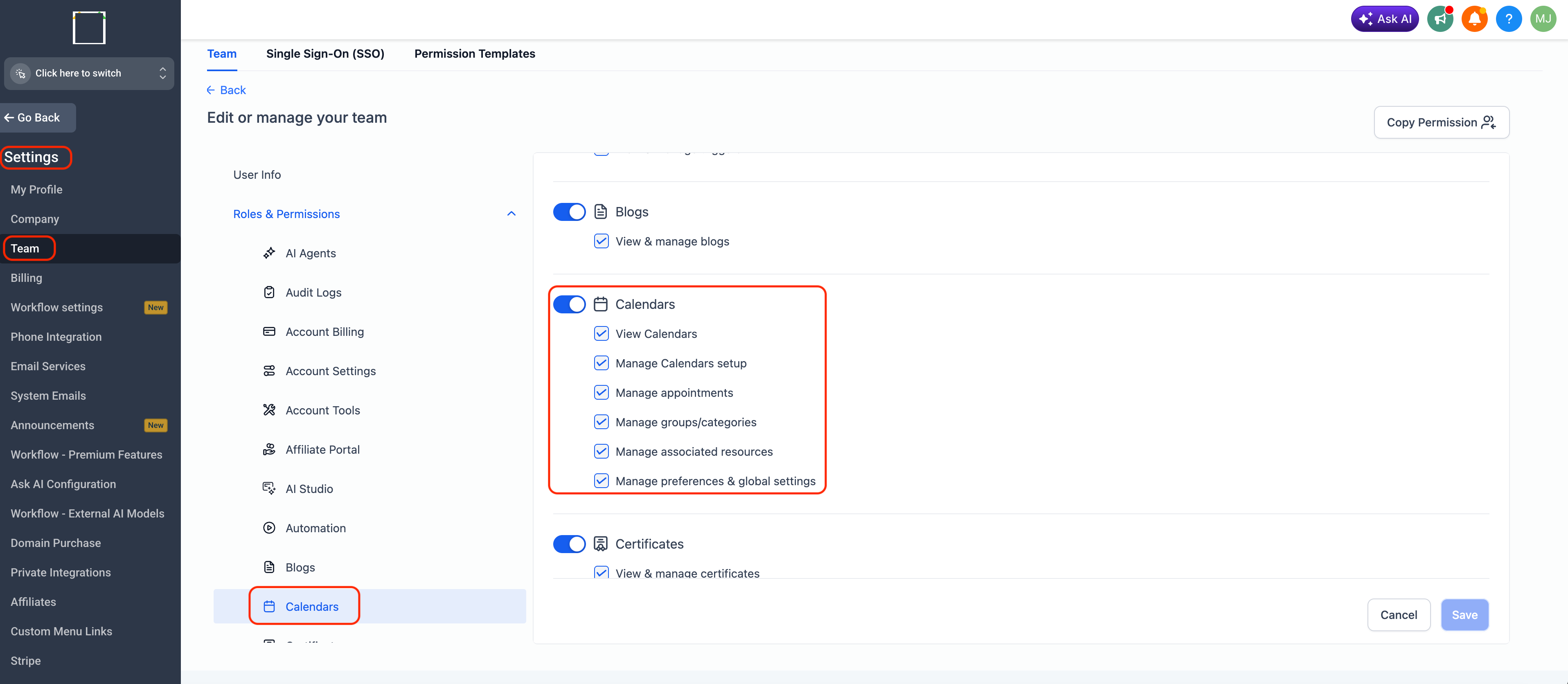
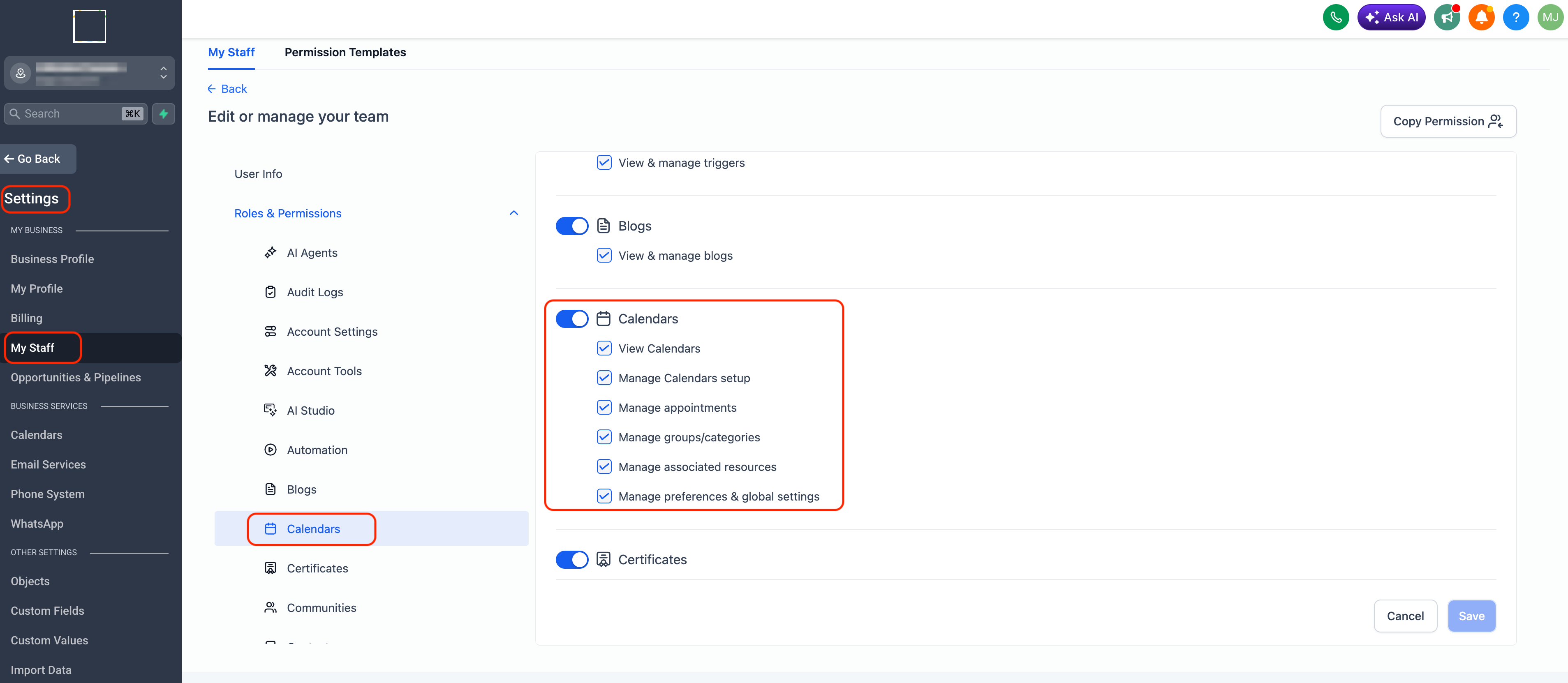
- View calendars – Access Meetings, Services or Rentals.
- Manage configuration – Manage calendars, services or rental listings.
- Manage appointments – Manage appointments and bookings across every module.
- Manage groups/categories – Manage meeting groups, service categories and rental categories.
- Manage associated resources – Manage locations, staff, resources, add-ons and other related items.
- Manage global preferences and settings – Manage global settings and preferences at module level.
Administrators can combine these permissions to create specific access for every role and team member.
How to set it up
To set the new permissions, go to Settings → My Staff → Select a team member → Roles and permissions → Calendars.
Configure the view and manage permissions you need, then click Save.
Why it matters
- It delivers a consistent permission management experience across Meetings, Services and Rentals.
- It gives administrators more granular control over what each team member can manage.
- It makes it simpler to assign role-specific responsibilities without granting unnecessary access.
- It improves security and scalability as teams and operations grow.