Immunoreica is the project founded by Ethel Cogliani to bring method, functional nutrition and specialist programmes inside an operating system that is tidier, measurable and possible to delegate.
2025
Immunoreica grew out of the work of Ethel Cogliani, a nutritional biologist and science communicator, on a functional approach to programmes covering nutrition, the immune system and wellbeing.
The project already had a strong identity, in-depth content and active acquisition channels. The difficulty was not "doing more marketing" in some generic sense: it was making everything that happens after the first contact governable.
Website enquiries, relationships, collaborations, content, YouTube and networking all had to feed into a single process: assessment, call, questionnaires, payment, consultation or retreat, personalised guidance and follow-up.
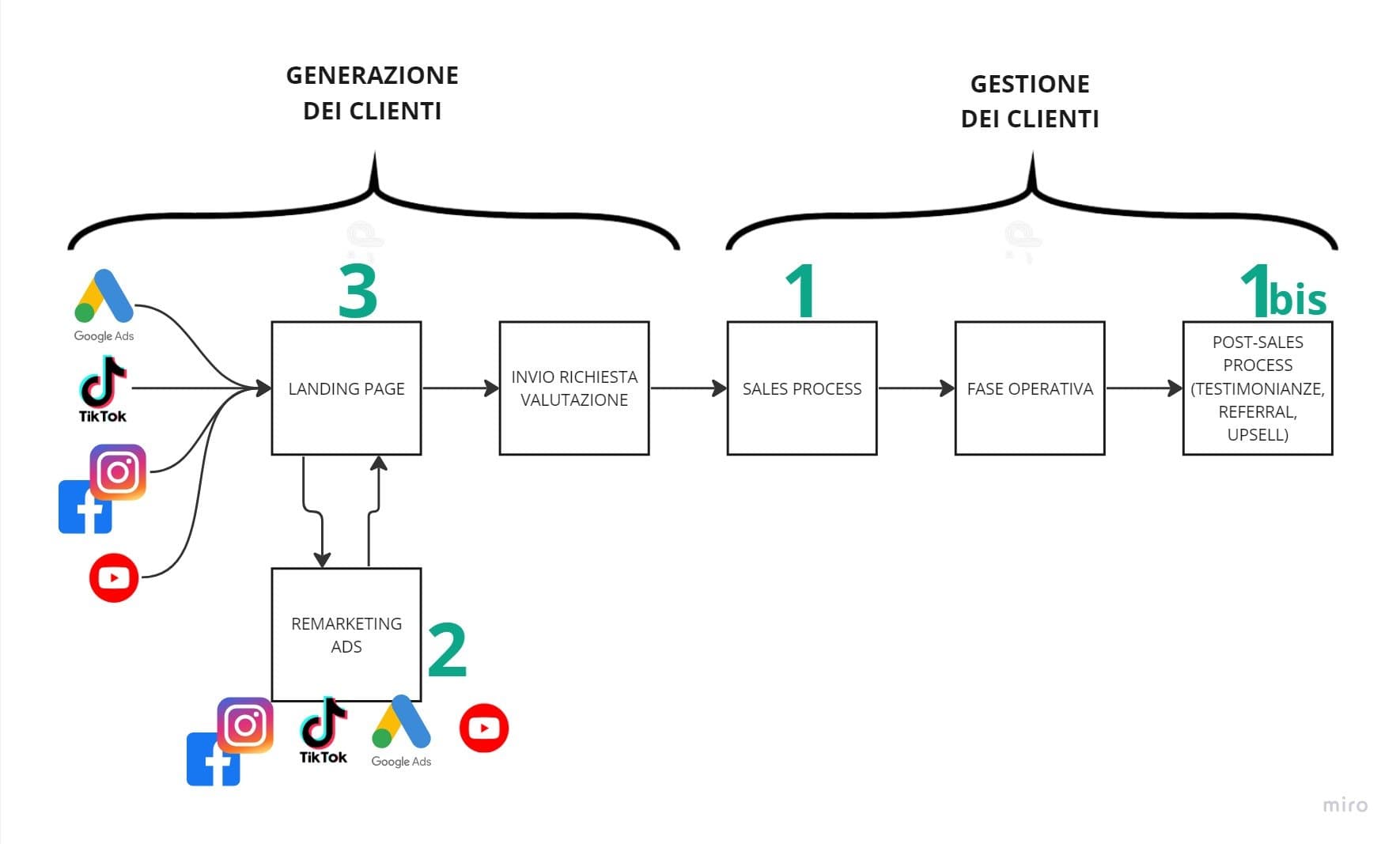
In the early work we separated two problems that often get confused: generating clients and managing clients. For Immunoreica there was no sense in increasing the pressure on the channels before making the sales and operational process traceable.
The project map set out acquisition, assessment request, sales process, delivery phase and after-sales in sequence. From there it became clear which data to collect, which steps to automate and which decisions to leave to Ethel's judgement.
The point was not to replace the human relationship with an automated sequence. It was to remove friction, manual errors and scattered handovers from a journey that demands precision.
Immunoreica already had a substantial setup on ActiveCampaign: pipelines, automations, forms, questionnaires and conditional communications for nutritional consultations and fasting retreats.
That system worked, but it depended on a platform built around email marketing and on external integrations. The hidden cost was in maintenance: more tools, more fragile points, more chance of losing context between one step and the next.
So we rebuilt the environment in Futuria CRM: import of contacts and opportunities, custom fields, pipelines, automations, forms, calendars, conversations and data structure. The migration turned a set of connected components into a single system.
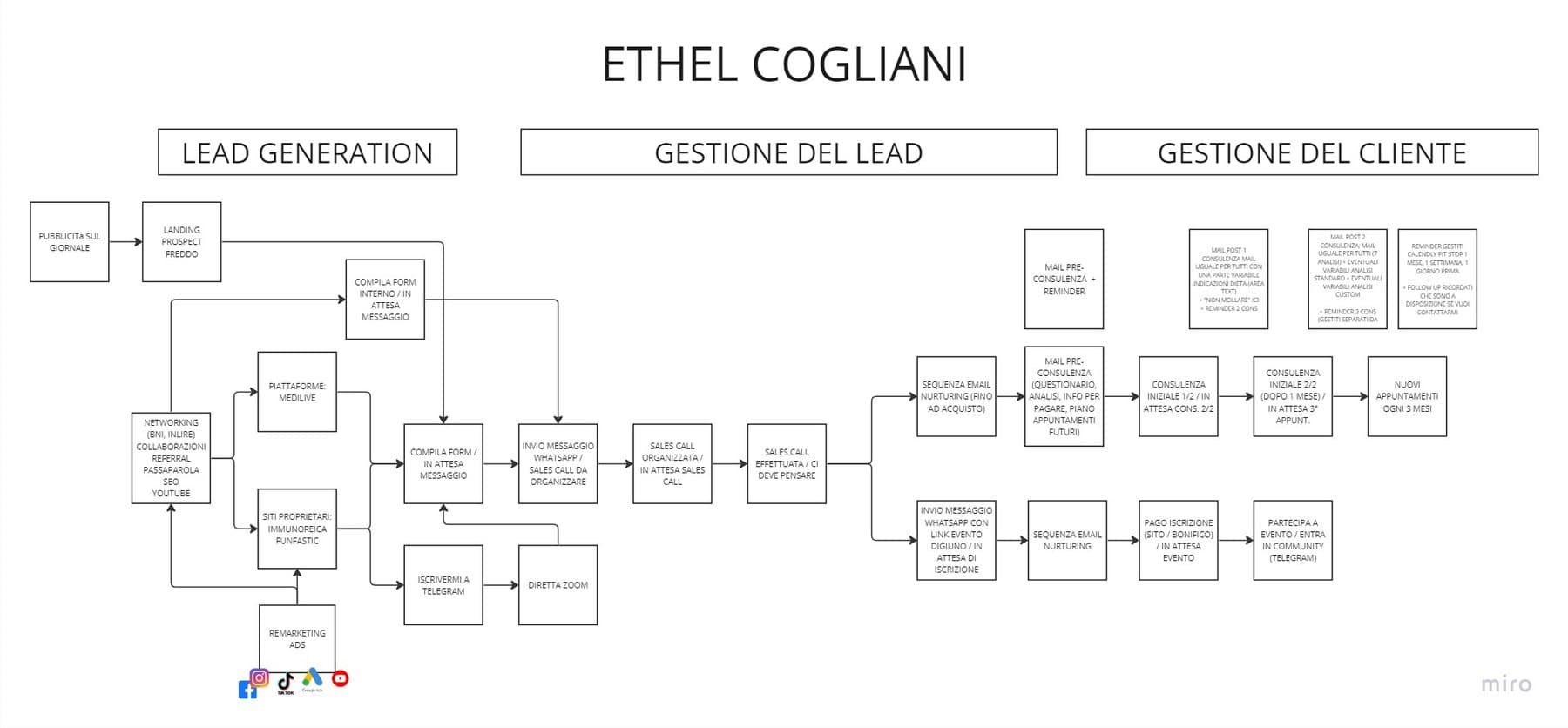
We recreated two distinct operating lines: one for nutritional consultations and one for retreats. In both, moving an opportunity between stages triggers consistent actions: messages, reminders, tasks, questionnaires, emails and follow-ups.
One important detail concerns post-consultation communications. The guidance could not live in a single undifferentiated block: it was split into specific fields, so the messages are more relevant and there is less risk of text that does not match the real case.
The timings were revised too. Some personalised emails, previously set with longer waits, were brought down to a shorter operational delay so that consultation, guidance and next action stay connected.
Alongside migrating the old setup, we prepared new, tidier entry points. One example is the LinkedIn mini-funnel: form, role qualification, optional phone number, region and direct entry into the CRM.
This makes it possible to tell doctors, biologists, coaches, communicators, laboratories and other contacts apart immediately, without rebuilding the context by hand. It is not a cosmetic detail: it is the quality of the incoming data.
The same logic was applied to the calendars and to conversation management, so that bookings, history and sales handovers do not end up scattered across emails, forms and personal notes.
The result is not a simple software swap. Immunoreica now has an environment better suited to supporting a specialist project: two clear pipelines, contacts with their history, useful fields, controllable automations and a process that stays readable as the workload grows.
For Ethel it means being able to see where each person is, what has already happened, which action is missing and what information is needed to carry on. For Futuria it means having built a solid base on which to graft new channels, AI, community or training programmes when they are needed.
The most important part of the project was translating specialist know-how into operational structure. It is less eye-catching than an advertising campaign, but it is what stops marketing from turning into noise.