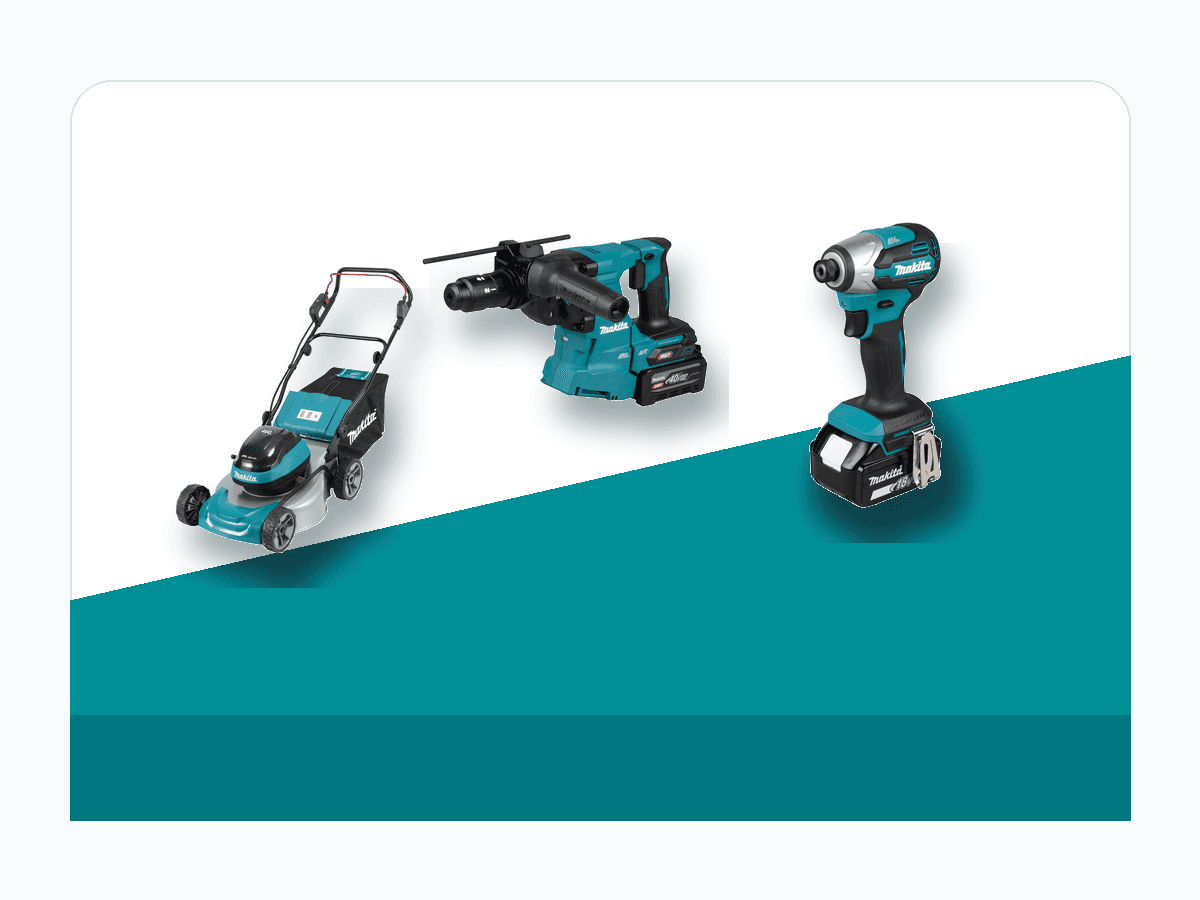
Makita Italia needed an orderly CRM foundation to manage contacts, consent, newsletters and communication to dealers and end users. Futuria built the operating structure that makes marketing more governable.
2026
Makita Italia works in a context where marketing is not merely publishing content or sending newsletters. It has to hold together a product catalogue, a reseller network, end users, technical communication, digital touchpoints and consent to marketing processing.
The challenge was not "using a CRM" in the abstract. It was building a dependable foundation, consistent with the way Makita communicates: the dealer audience on one side, the end-user audience on the other, and a clear rule about which contacts may receive marketing communication.
Futuria stepped in to set up the system: contact structure, tags, smart lists, consent forms, email templates, automations, domains and senders, and connections with the digital channels. In less elegant but truer terms: first you put the foundations in order, then you ask the building to stay up.
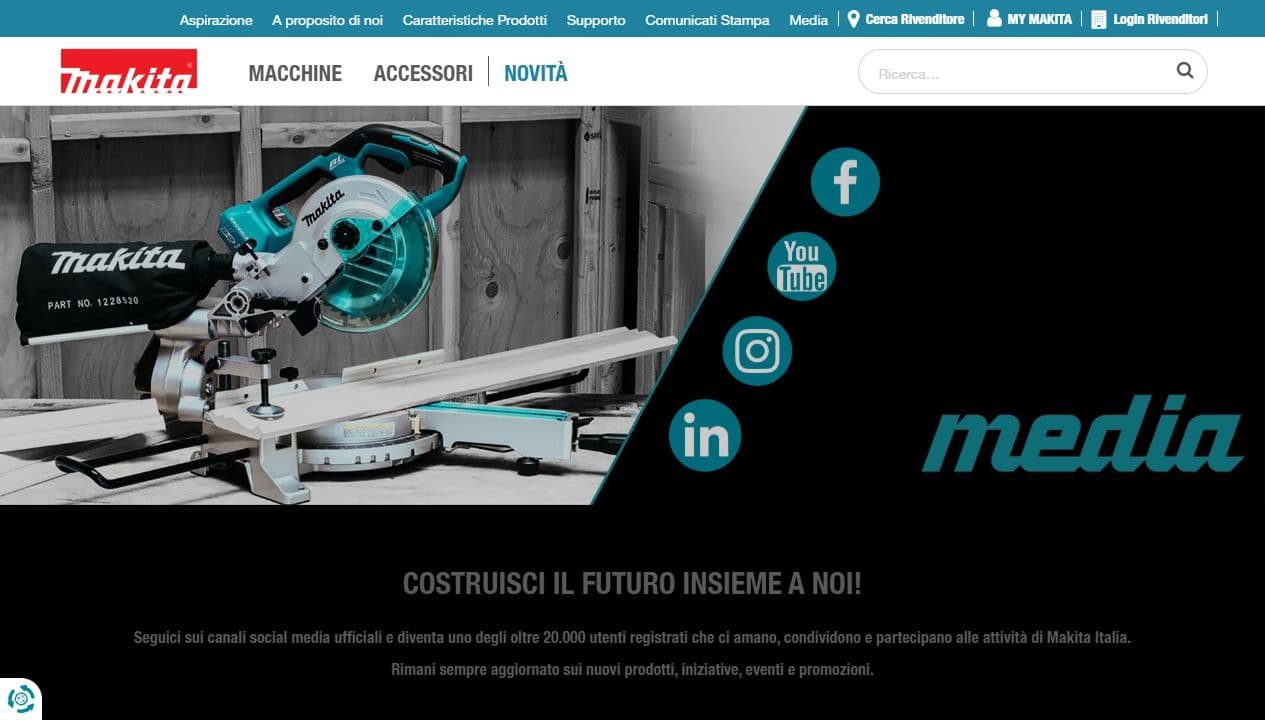
In a corporate project the problem is almost never a lack of tools. The problem is making them work to shared rules. A historical database that is not properly governed risks becoming an indistinct mass: useful contacts, out-of-date contacts, dealers, end users, missing consent and disconnected channels.
For Makita it was essential to separate two levels: the contact category and marketing consent. A reseller stays a reseller even without having given consent; an end user stays an end user even before joining a newsletter. But only those who take the correct action should end up in the definitive communication lists.
The distinction looks minor, but it is the point that turns a CRM from an expensive address book into governable marketing infrastructure.
The marketing work needed tidier foundations: historical contacts, dealer communication, the end-user audience, newsletters, permissions and digital channels could no longer be read as silos.
The value is in giving the data a readable structure: who the contact is, what relationship they have with Makita, what consent they have given and what communication they may receive.
We designed a logic that is simple to read and robust to maintain: category tags to distinguish dealers from end users, a marketing consent tag to allow entry into the smart lists, dedicated forms to capture the user's action, and automations to support the transition.
The important choice was not to confuse importing with authorisation. A contact may sit in the CRM for operational reasons, but that does not mean they should automatically enter a newsletter list.
This approach protects the quality of communication and makes the team's work clearer: the useful lists are not the biggest ones, they are the ones you can use with judgement.
The distinction matters: importing a list does not mean you may use it for marketing. The system was designed so that the definitive list only comes into being after a traceable action by the user.
Technical communication, updates and journeys tied to the reseller network.
End customers managed with forms, explicit consent and future communication.
The tag that makes a list usable is not assigned by hand: it comes from the user's own action.
The CRM work was accompanied by a wider setup: email domains and senders, newsletter templates, useful links, support on the digital channels and the operating basis for working on recurring communication.
For a structured company these details are not accessories. If the sender is not consistent, deliverability suffers. If permissions and channels are untidy, everyday work becomes more fragile. If touchpoints stay separate from the CRM, every new contact risks being lost along the way.
Futuria therefore worked on the direction: less improvisation, more continuity between communication, acquisition and follow-up.
The result is a tidier CRM structure to support newsletters, dealer communication, end-user contacts and follow-up activity. Not a theoretical document, but an operating base made of lists, tags, forms, senders, automations and connections between tools.
For anyone evaluating Futuria, this is the important part: we are useful when a set of channels, data and processes has to become a system the company can run with more control.
In the Makita case the point was not to add noise to marketing. It was to build a tidier machine before increasing the speed. Which, for a professional tools brand, is almost a form of conceptual courtesy.
We do not show contacts, lists, costs, budgets, account IDs, internal configurations or contractual data. That information served to understand the project, not to become promotional material.